I was dreading the coming of November and not only due to Halloween - I’ve been trying to keep abreast of magical news but life got the best of me and I didn’t manage to progress enough with either reading or writing to have enough content for this article.
Fortunately, November 11th is Poland’s Independence Day so I could catch up with everything, and after some final polishing I can finally publish it!
Lots of amazing entries this time around, two concentrated around WiFi sensing!
October in Magic
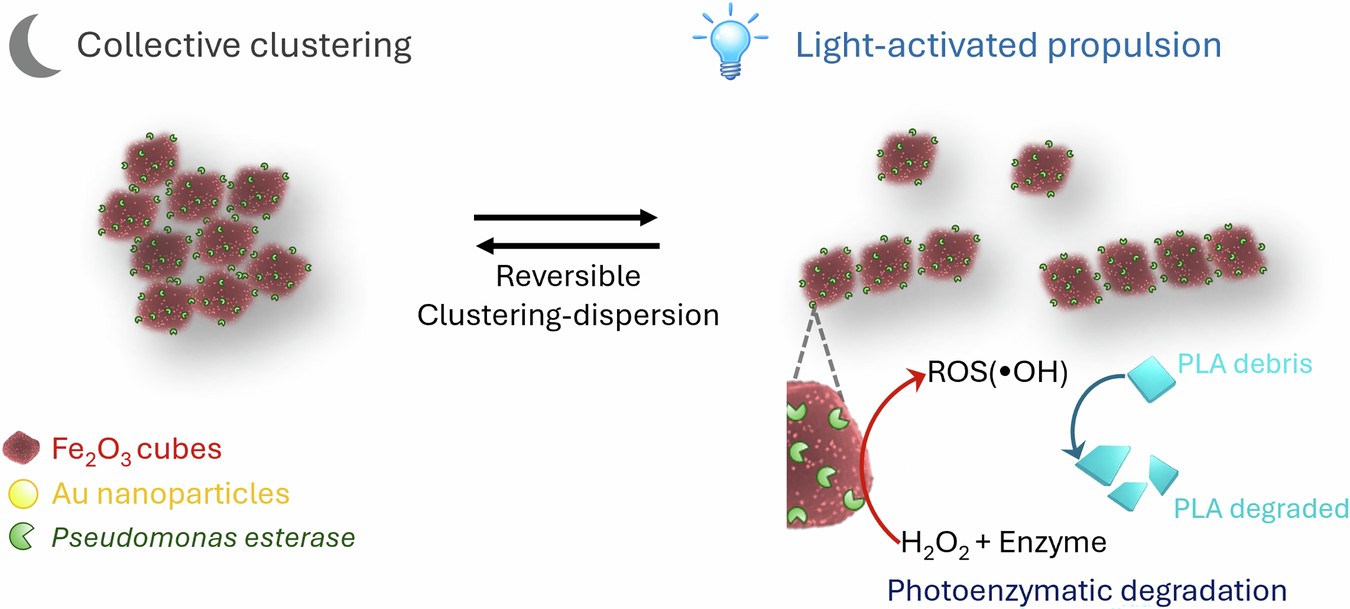
Spell of minor banish plastic. Scientists from the Italian National Research Council devised a system, of an enzyme-carrying light-actuated particles suspended in a solution of hydrogen peroxide, which breaks down PLA plastic. The exact mechanism isn’t currently isolated - the particles themselves or light in combination of hydrogen peroxide might be the main driver of the breakdown, but the swarming/dispersing articulation of particles as a mechanism was novel to me. Article link.
The artificer Stephen Cass demonstrates his puzzle box. A hacker affiliated with IEEE Spectrum demonstrated his design for a box unlocked by drawing a pattern. The box uses an 8x8 Hall-effect sensor array wired to a Teensy 4.1 microcontroller. Gesture-recognition software drives the servo that opens the lid. Article link.
X-Hinges: adding the sense of touch to golems - MIT scientists demonstrated a way of adding sensing mechanisms to 3D printed compliant mechanisms. The sense of touch depends on combining three materials (for example via an off-the-shelf multi-material 3D printer) one being non-conductive, the second highly conductive and the other less conductive. Example applications from the paper include a glove-like human-computer interface, a game controller, an origami lamp and a sensing mat. A straggler from September I don’t know how I missed! Article link.
Scroll of Navigation AstroHelm a commercial phone app that does astrometric solving to find the exact orientation of the camera relative to the night sky. The only prerequisite is a smartphone, rigid phone mount and suitable lens/telescope - no other specialized equipment required. Found via. App link
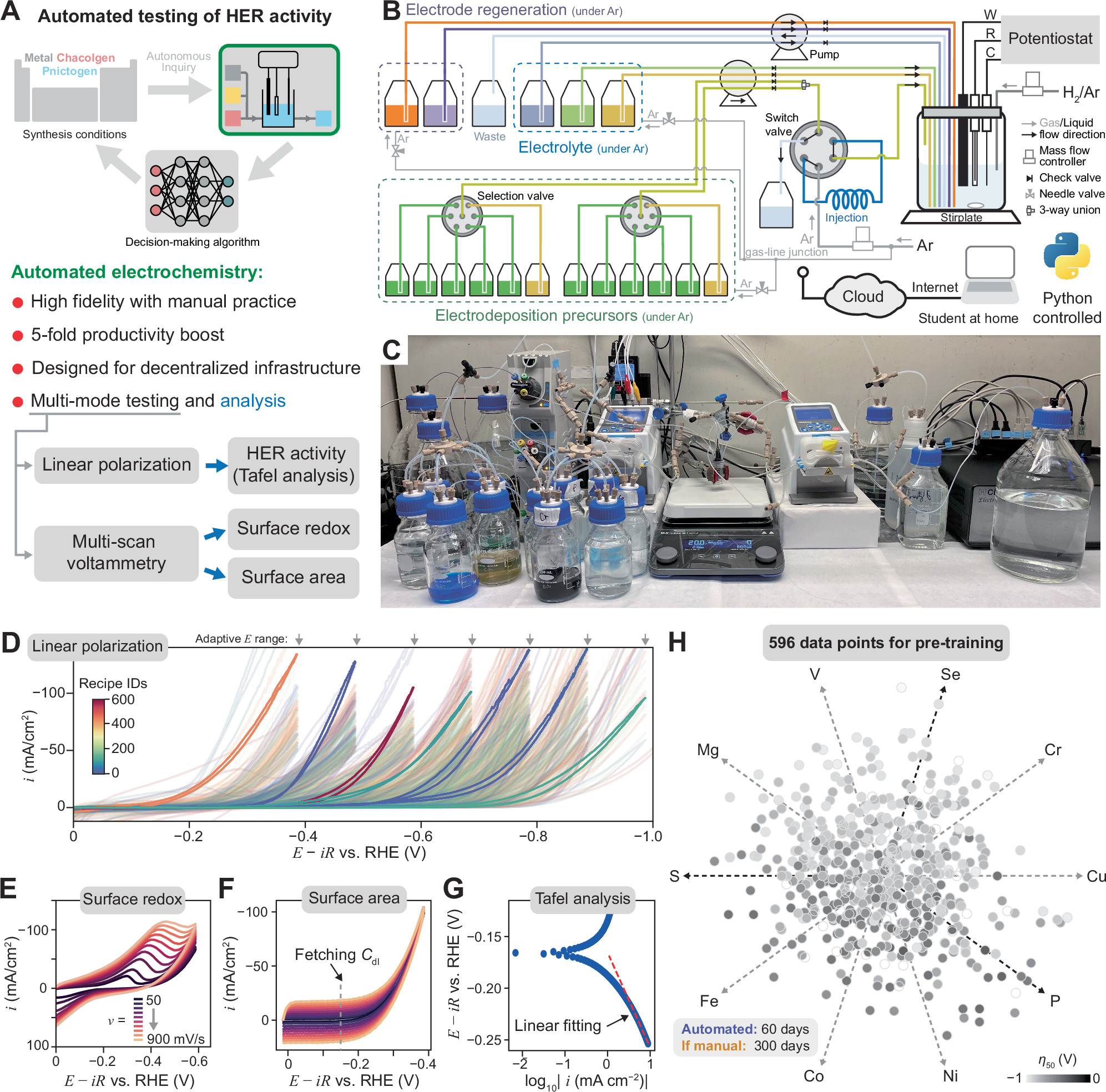
A witch’s pot? Alchemical familiar? an article from Nature Communications reports on a robotic setup for autonomously discovering (and performing!) electrochemical experiments. The experiments performed by the familiar used several potential catalysts for hydrogen evolution. The familiar ran an entire experimental campaign, proposed suitable reagent combinations and automatically performed a singular experiment run with the proposed combination of reagents - further amplifying the model. All from a relatively simple locally quadratic model of catalyst performance combined with 12-dimensions of synthesis conditions. A really beautiful piece of work. Article link.
Herbology helps synthesize cancer drugs. Paclitaxel an alcaloid used to treat a wide variety of cancer types obtained from the bark of the Pacific Yew, unfortunately each tree gives a low yield and full on synthesis is currently unachievable. Researchers from Shenzhen University demonstrated that a bioengineered moss could be used as a bioreactor to produce paclitaxel in a multi-stage reaction. Way over my head! Article link.
Dryadic Sigil of Temperature Detection - scientists from the Serbian University of Novi Sad developed a temperature sensor that can be applied directly to a plant leaf for the purpose of potential plant-based sensing. The sensor was tested and performed well under different temperature/humidity conditions supporting its use in the field. A microcontroller setup combined with the sensor provides real-time monitoring. Article link.
Spell of Detect Weapon researchers from the Swedish Defense Research Agency presented a method of leveraging WiFi for concealed handgun detection (as a supplementary method alongside metal detectors and cameras). Their work presents the entire methodology: experimental setup, training set and model architecture. Article link.
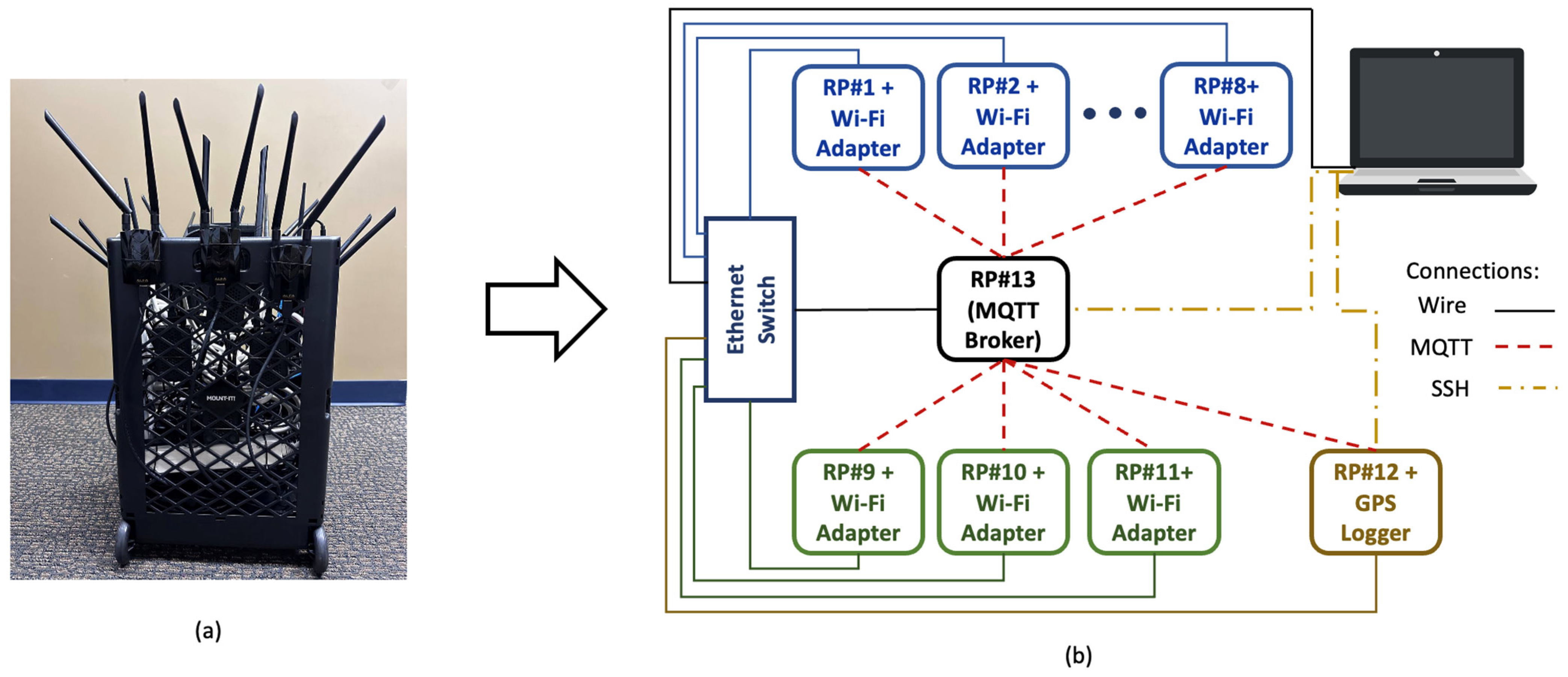
Spell of Detect Fall LeafSense - a system comprising of Raspbery Pis and WiFi-adapters was used to detect foliage changes in a known (pre-picked) environment (potential uses include municipalities wanting to perform leaf collection services). Received Signal Strength Indicator variations alone were enough to detect foliage presence/absence. Article link.

Parting Thoughts
Like in previous months, the presence of automated research was felt heavily in the articles I read. My gut feeling says that we’re in the midst of a second knowledge revolution - every research lab will become a research lab factory.
My favorite article from this month is definitely the Gold-Leaf-Based plant tattoo - I can easily imagine magical meanders being used as magical runes!